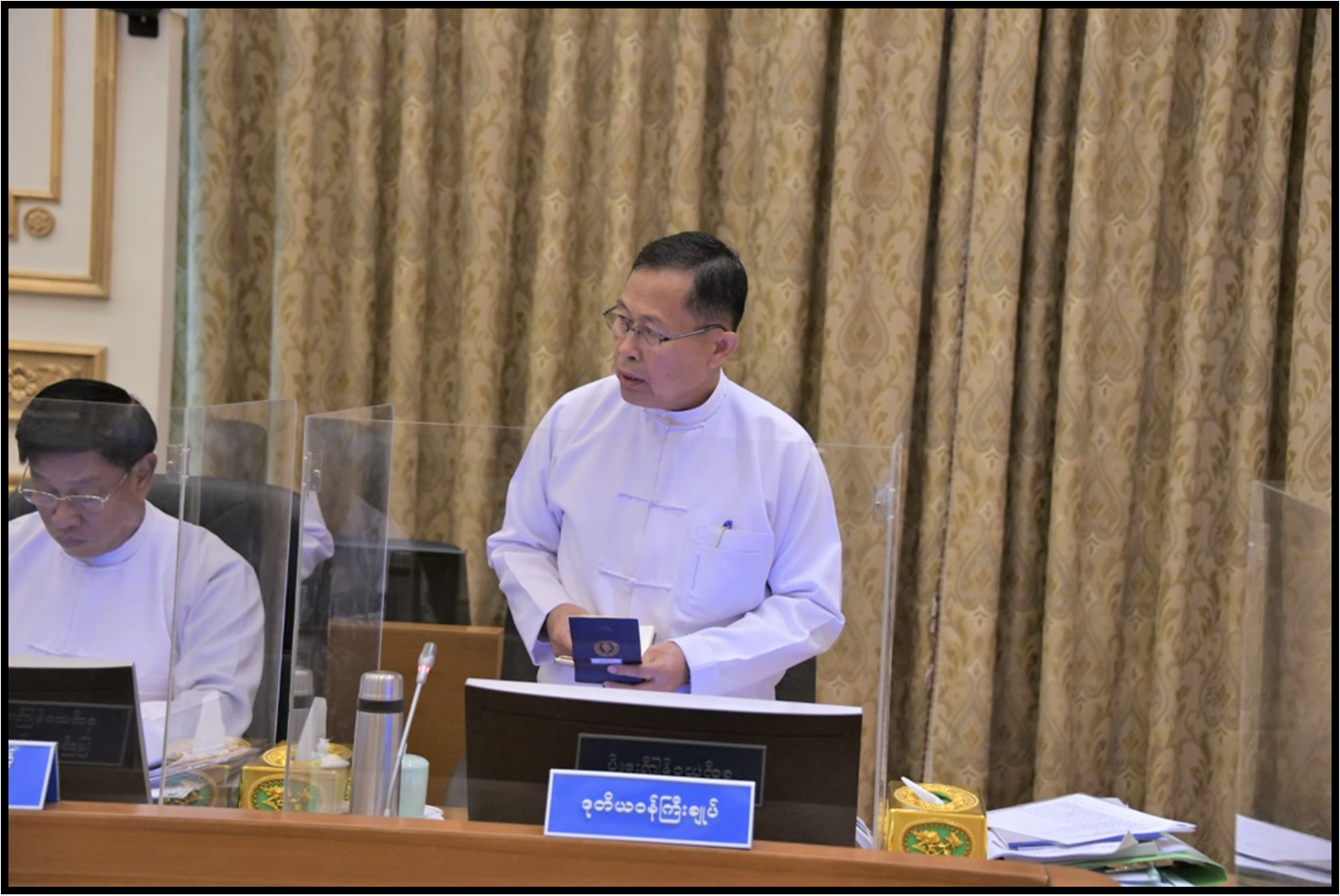

Work Coordination Meeting 1/2023 of Central Committee on Implementing Development of Border Areas and National Races Held
Work Coordination Meeting 1/2023 of Central Committee on Implementing Development of Border Areas and National Races Held
Ministry of Defense/ Naypyitaw / May 09, 2023
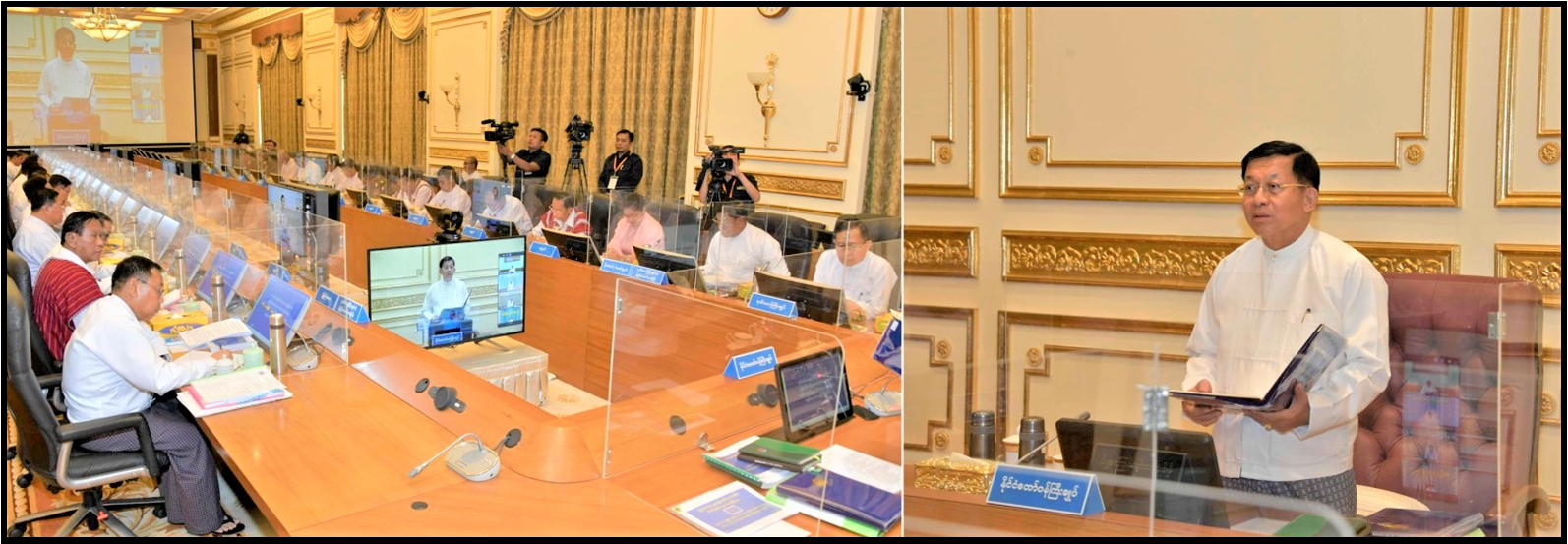
The Chairman of the State Administration Council (SAC) Prime Minister Senior General Min Aung Hlaing, who is serving as the Chairman of the Central Committee on Implementing Development of Border Areas and National Races, attended the work coordination meeting 1/2023 of the central committee which was held on 5 May. During the meeting, the Prime Minister delivered remarks as follows:
· The State Law and Order Restoration Council first established the central committee with five members on 25 May 1989. During the tenur of the SAC government, it reformed the central committee with 22 members, and work committee with 37 members to develop the border areas with added momentum.
· Peace and stability are crucial in striving for the development of border regions. Peace and stability are based on national unity.
· Since its establishment, the State Administration Council has been emphasizing the prosperity of the State and food security, the socioeconomic development of the entire people, restoration of perpetual peace, and secure and smooth transport of the entire Union.
Moreover, the SAC has been giving priority to the socio-economic infrastructures and human resources development programs for progress of education, health, transport and communication, agriculture and livestock, and economic sectors which are included in the border area development task, and also the counternarcotic programs.
· The development of the nation depends on the enhancement of education qualifications. The government should pay attention to the education promotion of all national races to reach the minimum KG+9 target for all school age children.
· Efforts should be made to ensure sufficiency of basic food items and to produce farming-based value-added goods to support regional progress. All should strive to improve quality and increase quantity of goods.
· Further efforts must be made to implement micro, small and medium-size hydropower generation projects rather than now in respective regions that will contribute to socio-economic development.
· It can be learnt that there are still many sectors in which several further tasks must be carried out for socio-economic development of border areas where our national brethren and the people reside.
· An emphasis is being placed on the development of human resources for youths from border regions. In this regard, 47 border youth development training schools are training 33,007 students and arrange them to continue learning in higher education and vocational schools. The University for Development of the National Races of the Union produces 14,058 students at different levels of degrees as well as teachership diplomas up to the 2022-23 fiscal year. Nationalities Youth Resources Development Degree Colleges in Yangon and Sagaing turned out 4,701 students.
· In the vocational education sector, nine technical training schools have nurtured 6,077 trainees up to 2022-2023 fiscal year, and jobs have been created for them. Moreover, 47 vocational training centres for women have trained 95,022 trainees, who have joined the workplace respectively.
· Everybody needs to specially take care of restoring peace and stability and national unity in the entire nation through undertakings of border region development which is essential for building the Union based on democracy and federalism that the entire people inspire.
· The door of peace is always open to ethnic organizations which have not reached the peace talks yet without any pre-restrictions.
Afterwards, Central Committee Secretary Union Minister for Border Affairs and central committee members reported on the implementation of development tasks of border regions and national races, and future tasks for respective sectors.
Later, the Vice-Chairman of the Central Committee the SAC Vice-Chairman Deputy Prime Minister exhorted the responsible officials to effectively take action, act to ensure development among the ethnic peoples without gap, and carry out regional development tasks through ensuring development of MSMEs.
After hearing the reports, the SAC Chairman Prime Minister stressed the following points:
· It is necessary to give priority to make education infrastructure better in border areas and to cooperate with the relevant ministry to fulfill the need of teaching aids and staff.
· As communications is important for border areas, it is compulsory to ensure that the areas will have access to communications.
· It is also necessary to successfully operate MSMEs and agriculture and livestock businesses as well as to ensure growth in manufacturing products.
· Development of border areas and peace and stability are interrelated. Development cannot be achieved in the regions having no peace and rule of law, and it is to be aware that there will be no peace for long term without any development.
· Border areas are wide but their population density is low. Roads and communications were expanded much in those areas as they have difficulties in communicating with others residing in mainland.
It is learnt that in cooperating with international organizations and countries for development of border areas, tasks for building infrastructure and ensuring human resources development in border areas are being effectively carried out with the foreign assisted funds including those from India and China.
Also present were SAC Vice-Chairman Deputy Prime Minister Vice-Senior General Soe Win, SAC members and deputy prime ministers, deputy prime minister and union minister, SAC members, Chief of General Staff (Army,Navy and Air) General Maung Maung Aye, senior military officers from the Office of the Commander-in-Chief, deputy ministers and officials. Region/state chief ministers attended the meeting through videoconferencing.
Source: Myawady Daily Newspaper (6-5-2023)